
SRA Freezes Sale Flats of Defaulting Builders to Recover Resident Dues
SRA Freezes Sale Flats of Defaulting Builders to Recover Resident Dues
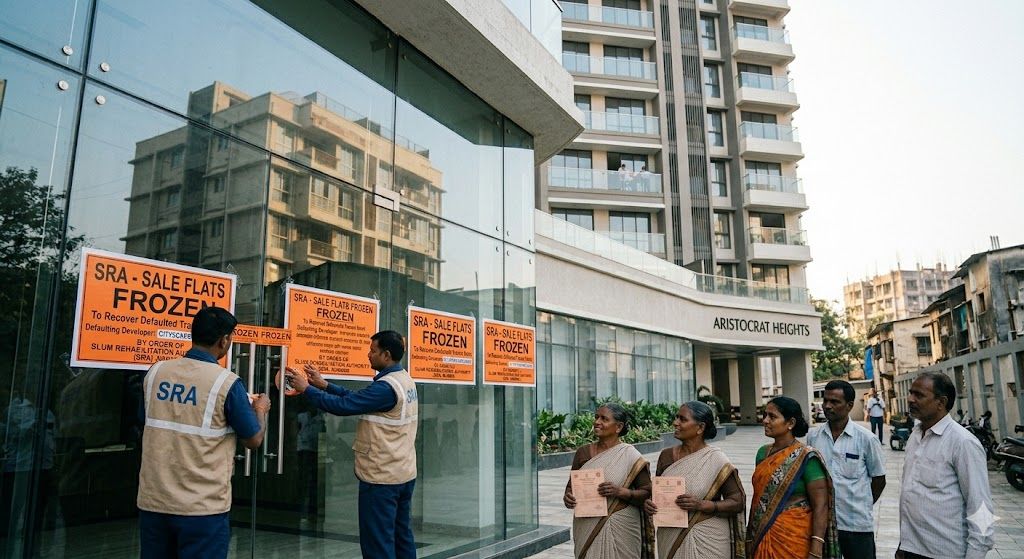
The Slum Rehabilitation Authority (SRA) has initiated a new enforcement mechanism by freezing the saleable flats of defaulting developers to recover dues owed to residents affected by redevelopment projects. The move is aimed at strengthening accountability within the redevelopment sector and ensuring that developers fulfil their financial obligations towards displaced families.
In redevelopment projects, residents are often required to temporarily vacate their homes while construction takes place. During this period, developers are typically responsible for paying transit rent so that affected families can arrange alternative accommodation until their rehabilitation homes are ready.
When transit rent payments are delayed or stopped, residents can face severe financial hardship. The latest action by the SRA seeks to address this issue by creating stronger consequences for non-compliance.
Why Transit Rent Is Critical in Redevelopment
Transit rent is one of the most important commitments made to residents during redevelopment projects. Since families are required to leave their existing homes before construction begins, the rent support helps them secure temporary accommodation during the redevelopment period.
For many households, this payment is not merely a contractual obligation but an essential source of financial support. Delays in receiving transit rent can place significant pressure on families, particularly when redevelopment timelines extend beyond original expectations.
Ensuring timely payment is therefore critical to maintaining trust between residents and developers throughout the redevelopment process.
How Freezing Sale Flats Creates Accountability
The SRA's decision to freeze saleable flats introduces a powerful enforcement mechanism. Sale flats represent a developer's primary revenue source in most redevelopment projects. Restricting the ability to sell these units can create significant financial pressure and encourage compliance with obligations owed to residents.
By linking enforcement directly to a developer's inventory, authorities gain a practical tool for recovering outstanding dues. The measure also sends a clear message that commitments made to rehabilitation beneficiaries cannot be ignored without consequences.
The approach reflects a stronger emphasis on protecting the interests of residents who often have limited bargaining power once redevelopment begins.
A Significant Shift in Redevelopment Enforcement
Redevelopment projects involve complex relationships between developers, residents, housing societies, and regulatory authorities. While regulations and agreements establish obligations, enforcement has often been a challenge when disputes arise.
The latest action represents a more proactive approach to ensuring compliance. Rather than relying solely on legal proceedings or administrative notices, authorities are targeting assets that directly influence project economics.
Such measures can help improve discipline across the sector and encourage developers to prioritise obligations related to rehabilitation and transit accommodation.
What It Means for Residents
For residents displaced by redevelopment projects, stronger enforcement mechanisms can provide greater confidence that their rights and entitlements will be protected. Families who depend on transit rent often have limited alternatives when payments are delayed, making timely intervention by authorities particularly important.
The move also reinforces the principle that redevelopment should not come at the expense of the people it is intended to benefit. Protecting rehabilitation beneficiaries remains essential to maintaining public confidence in redevelopment as a housing solution.
For many affected residents, the action is likely to be viewed as a positive step towards ensuring fair treatment throughout the redevelopment process.
Impact on Mumbai's Redevelopment Market
Mumbai's future housing supply is increasingly dependent on redevelopment projects. As redevelopment activity expands, effective regulation and enforcement become essential for maintaining credibility and ensuring successful project outcomes.
The SRA's decision could influence how developers manage financial obligations and interact with residents during future projects. Stronger enforcement may also encourage more responsible project planning and improve overall compliance within the sector.
In the long run, measures that protect residents while ensuring accountability can contribute to a healthier and more sustainable redevelopment ecosystem.
Expert View
"Transit rent is a lifeline for families displaced during redevelopment. Enforcement mechanisms that ensure developers honour these commitments are essential for maintaining trust in the redevelopment process. Freezing saleable inventory is a strong regulatory tool because it directly links compliance to a developer's commercial interests." — Sandeep Sadh
Looking to buy or rent in Mumbai?
Talk to Mumbai's oldest property portal — RERA-verified listings, real availability, instant answers.
More Property News









💬 Comments