
Mumbai's Redevelopment Wave: How Dhobi Ghat's Transformation Signals the City's Next Property Boom
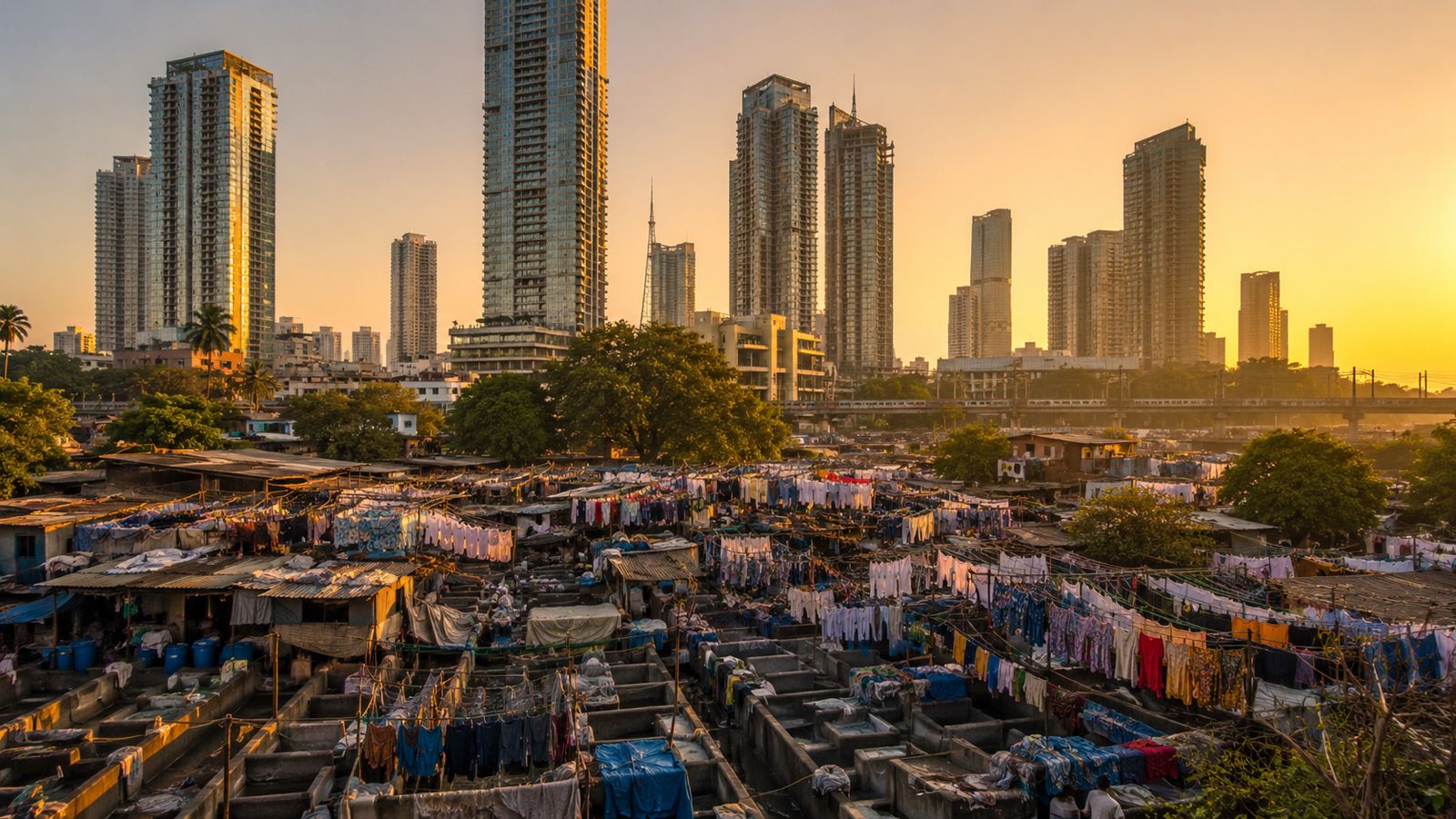
In a city where vacant land is almost mythical, Mumbai's real estate future is increasingly being written through redevelopment. Nowhere is this transformation more visible than at Dhobi Ghat in Mahalaxmi, where one of the world's largest open-air laundries is giving way to a new skyline of rehabilitation towers and ultra-premium residences.
A Landmark Reborn
Spread across roughly 12 acres of prime South Mumbai land, the Dhobi Ghat redevelopment is being executed as a joint venture between Omkar Realtors and Piramal Realty under the Maharashtra government's slum rehabilitation scheme. The project is designed to rehouse around 16,000 slum residents in phases, many of them families connected to the laundry trade that has defined the precinct since the late 1800s.
The rehabilitation component has already made history. The rehab towers at the site rank among the tallest slum rehabilitation structures in the world, rising over 40 storeys. Thousands of families from settlements bordering the ghat have begun moving into new homes, with retail units and community facilities built into the development.
Alongside the rehab buildings, the free-sale component features luxury housing with uninterrupted views of the Mahalaxmi Race Course and the Arabian Sea, positioning the project among the most premium addresses in South Mumbai.
Why Redevelopment Is Mumbai's Growth Engine
The Dhobi Ghat story reflects a much larger structural shift. With negligible greenfield land available within city limits, redevelopment has become the dominant source of new housing supply in Mumbai. Slum rehabilitation projects, cessed building reconstruction in the island city, and society redevelopment in the suburbs together account for a growing share of new launches.
Policy support has accelerated the trend. Higher floor space index incentives, streamlined approvals, and a state government push to clear long-stalled slum schemes have brought institutional developers into a space once dominated by smaller players. Established names now compete for redevelopment rights across Mahalaxmi, Worli, Bandra, and the western suburbs.
The numbers underline the scale of opportunity. In Worli alone, redevelopment-led luxury projects are targeting revenues exceeding ₹10,000 crore from single land parcels. Further north, the Dharavi redevelopment, estimated at around USD 8 billion, aims to convert Asia's largest informal settlement into a modern urban district, potentially releasing enormous land value in the heart of the city.
The South and Central Mumbai Premium
Mahalaxmi, Worli, and Lower Parel have emerged as the biggest beneficiaries of this redevelopment cycle. These micro-markets combine scarcity, sea views, and improving connectivity through the coastal road, Metro Line 3, and the Atal Setu ecosystem. Capital values in redeveloped luxury projects in these belts now rank among the highest in India, and developers report strong absorption in the ₹5 crore-plus segment despite elevated pricing.
For the city's washermen community at Dhobi Ghat, the transition is more complex. While thousands of families gain ownership homes with modern amenities, the traditional laundry trade is shrinking as mechanisation spreads and younger generations move into other professions. The redevelopment thus captures both the promise and the tension of Mumbai's urban renewal: economic upliftment on one side, the fading of a heritage livelihood on the other.
What Lies Ahead
With the state government targeting faster clearances for stalled SRA schemes and large corporate developers committing capital to cluster redevelopment, market watchers expect redevelopment to drive the next multi-year cycle of supply in Mumbai. For a city that cannot grow outward, growing upward through renewal is no longer just an option. It is the blueprint.
Expert View by Sandeep Sadh
For homebuyers, redevelopment projects in locations like Mahalaxmi and Worli offer something Mumbai rarely provides: brand-new construction in established, central neighbourhoods. Buyers should, however, prioritise projects led by financially strong developers with proven rehab delivery, as execution timelines in slum schemes can stretch when consent or approvals stall.
For investors, the South and Central Mumbai redevelopment belt remains one of the most compelling long-term plays in Indian real estate. Land scarcity, infrastructure upgrades, and rising HNI demand create a durable price floor. Early entry into credible redevelopment-led launches has historically delivered superior appreciation compared to peripheral markets.
For developers, the message is equally clear. Redevelopment is capital-intensive and approval-heavy, but it is now the primary route to prime land in Mumbai. Partnerships between rehab specialists and branded developers, as seen at Dhobi Ghat, are likely to become the standard model for large urban renewal projects.
For the broader market, projects of this scale demonstrate that social housing and luxury development can coexist on the same land parcel. If executed sensitively, Mumbai's redevelopment wave can simultaneously rehouse lakhs of families and sustain the city's premium housing boom, a balance few global cities have achieved.
— Sandeep Sadh
Looking to buy or rent in Mumbai?
Talk to Mumbai's oldest property portal — RERA-verified listings, real availability, instant answers.
More Property News


💬 Comments