
Bullet Train Project Adopts New Tunnel Technology
New Technology Added to India’s Bullet Train Project
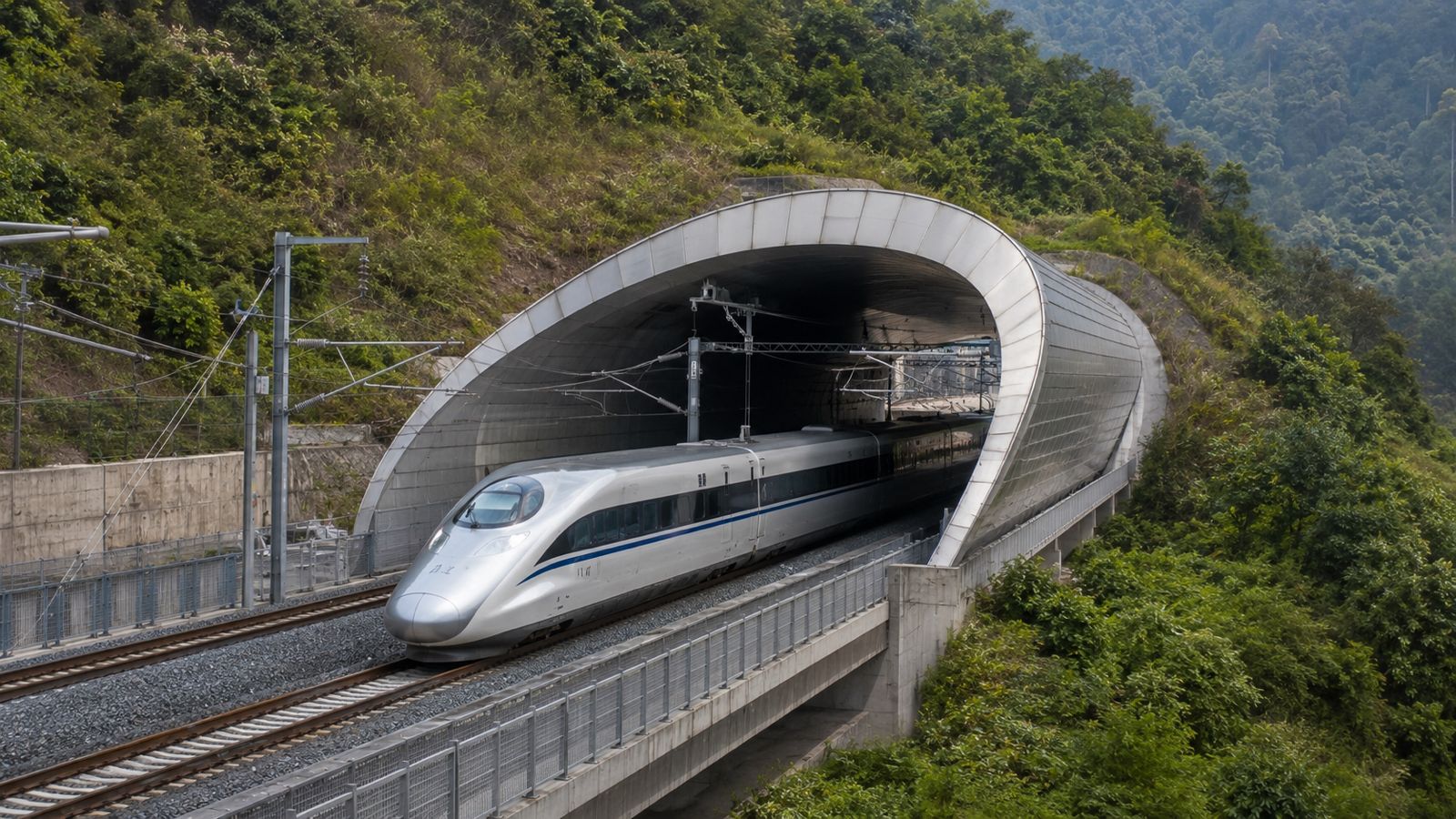
India’s first bullet train corridor is preparing to deploy tunnel hood technology, a feature widely used on high-speed rail networks across several countries. The technology will be introduced as part of the Mumbai-Ahmedabad High-Speed Rail project and marks another engineering milestone for the country's most ambitious rail infrastructure initiative.
Tunnel hoods will be installed at the entrances of mountain tunnels along the route. While they may appear to be simple structural extensions, they play a critical role in improving train operations at very high speeds.
The adoption of this technology reflects the increasing use of global high-speed rail standards in India's transportation infrastructure projects.
What Is Tunnel Hood Technology?
When a high-speed train enters a tunnel, it pushes a large volume of air into the enclosed space ahead of it. This creates sudden pressure changes that can generate noise, vibrations, and aerodynamic shock waves.
Tunnel hoods are specially designed structures built at tunnel entrances to manage these pressure changes more gradually. By controlling airflow, the system reduces the impact of sudden air compression and improves overall train performance.
The technology is commonly used in countries with advanced high-speed rail systems and has proven effective in enhancing passenger comfort while reducing environmental noise.
Why It Matters for the Bullet Train
The Mumbai-Ahmedabad Bullet Train corridor includes several mountain tunnels that require advanced engineering solutions. As trains operate at extremely high speeds, managing aerodynamic forces becomes increasingly important.
Tunnel hoods help reduce noise levels near tunnel portals, improve operational efficiency, and create a smoother experience for passengers travelling through tunnel sections. They also contribute to the long-term durability and performance of the overall rail infrastructure.
The technology will be particularly useful in sections where trains transition rapidly between open tracks and enclosed tunnel environments.
Engineering Standards Continue to Rise
The bullet train project has already introduced several technologies that are new to India's transportation sector. From large-scale tunnel boring operations to undersea tunnelling and advanced track systems, the corridor is setting new benchmarks in railway construction.
The addition of tunnel hood technology further demonstrates the project's focus on adopting international engineering standards. As India moves towards high-speed rail operations, such innovations are expected to play a vital role in ensuring safety, efficiency, and passenger comfort.
The project is also helping develop expertise in advanced rail engineering that could benefit future high-speed corridors across the country.
Infrastructure Impact Beyond Rail Transport
Large transportation projects often have a broader impact beyond mobility improvements. High-speed rail corridors can influence urban development, strengthen regional connectivity, and encourage economic activity around station zones.
The Mumbai-Ahmedabad corridor is expected to improve connectivity between major commercial centres while supporting long-term development opportunities along the route.
As construction progresses, the project continues to showcase how modern infrastructure can combine engineering innovation with economic growth objectives.
A Significant Step Towards Modern Rail Travel
Tunnel hood technology may not be as visible as stations or trains, but it represents the kind of behind-the-scenes engineering that contributes to successful high-speed rail operations.
By reducing pressure fluctuations and improving operational performance, the technology will help create a smoother and quieter travel experience for future passengers. Its introduction also highlights India's commitment to building infrastructure that aligns with global best practices.
As the bullet train project advances, innovations such as these are helping shape the future of rail transportation in the country.
Expert View by Sandeep Sadh
The introduction of tunnel hood technology demonstrates how modern infrastructure projects increasingly rely on advanced engineering rather than conventional construction alone. High-speed rail systems require precision solutions that improve efficiency, safety, and passenger experience.
The Mumbai-Ahmedabad Bullet Train project is becoming a showcase for technologies that have rarely been used in India before. These innovations not only improve project performance but also help build domestic expertise in high-speed transportation infrastructure.
From a broader perspective, world-class transportation infrastructure supports economic development, regional integration, and real estate growth around key transit corridors.
As India continues investing in large-scale connectivity projects, the adoption of proven international technologies will remain essential for achieving global standards in infrastructure development.
— Sandeep Sadh
Looking to buy or rent in Mumbai?
Talk to Mumbai's oldest property portal — RERA-verified listings, real availability, instant answers.
More Property News







💬 Comments