
IFC Investment Signals Big Opportunity for Mumbai Data Centres
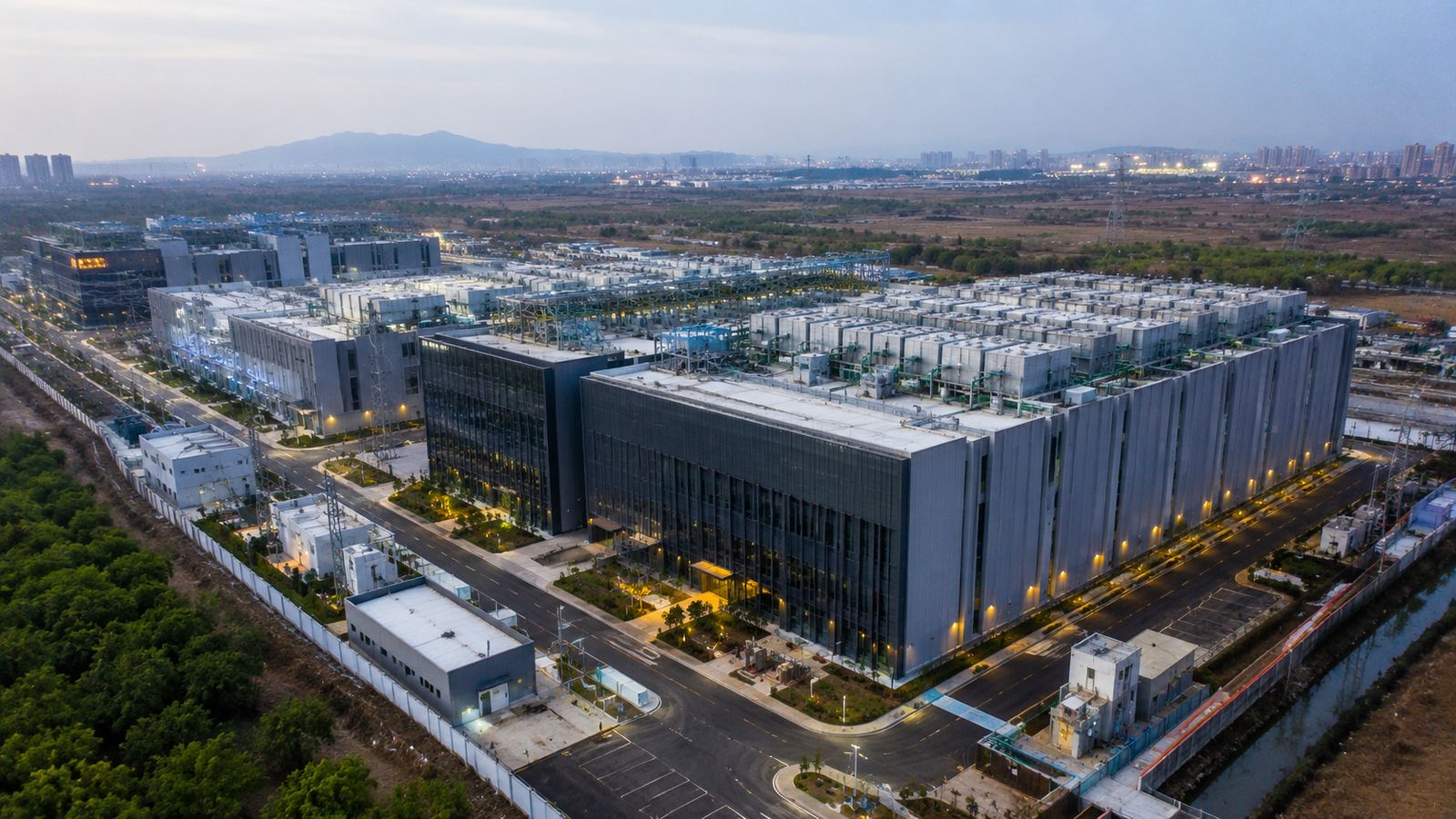
A major investment into Sify’s data centre expansion is much more than a technology funding announcement. It is a strong signal that global institutions increasingly view India's digital infrastructure sector as a long-term growth opportunity.
The investment will support the development of next-generation data centres, including a major facility in Navi Mumbai. While data centres may appear to be technology assets, they are rapidly becoming one of the most important segments within commercial real estate.
Globally, investors are allocating billions of dollars toward data centre infrastructure as artificial intelligence, cloud computing, digital payments, online banking, streaming platforms, and enterprise software continue to increase demand for data storage and computing power. India is emerging as one of the biggest beneficiaries of this trend.
Why Are Global Investors Interested in Data Centres?
Data centres have become the backbone of the digital economy.
Every online transaction, cloud application, video stream, AI model, digital payment, stock market trade, and banking operation relies on servers housed inside data centres.
Unlike traditional office buildings, data centres often operate on long-term contracts and serve critical infrastructure needs. This creates predictable demand and long-term revenue visibility, making them attractive to institutional investors.
The rise of artificial intelligence is creating another layer of demand. AI workloads require significantly greater computing power, which in turn requires larger and more advanced data centres. This is one of the key reasons global capital is flowing into the sector.
Why Is Mumbai Becoming India's Data Centre Capital?
One of the most important questions for real estate investors is why so many data centre projects are being concentrated around Mumbai.
The answer lies in infrastructure.
Mumbai is India's financial capital and hosts the country's largest concentration of banks, financial institutions, stock exchanges, fintech companies, cloud service providers, and enterprise customers. These businesses generate enormous volumes of data that must be processed and stored securely.
The city also benefits from international subsea cable connectivity that links India to global internet networks. This allows faster and more reliable international data transmission compared to many other locations.
For data centre operators, proximity to major business users reduces operational complexity and improves performance.
As a result, Mumbai has emerged as India's largest and most mature data centre market.
Why Navi Mumbai Is Attracting Data Centre Development
While Mumbai creates demand, Navi Mumbai provides room for expansion.
Large data centres require significant land parcels, access to high-capacity power infrastructure, fibre connectivity, transportation links, and future scalability.
Locations such as Airoli, Ghansoli, Rabale, Mahape, Taloja, Panvel, and surrounding industrial corridors offer these advantages while remaining more cost-effective than central Mumbai.
This combination of affordability and infrastructure availability has transformed Navi Mumbai into one of India's fastest-growing digital infrastructure hubs.
The latest investment further strengthens this position and could accelerate additional development activity across the region.
Understanding Data Latency and Why It Matters
One of the most important yet least understood concepts in the data centre industry is latency.
Latency refers to the time required for data to travel between a user and a server.
For applications such as online banking, stock trading, artificial intelligence, cloud computing, digital payments, and enterprise software, even tiny delays can affect performance.
By locating data centres close to major business hubs such as Mumbai, operators can reduce latency and deliver faster digital experiences.
This is particularly important for financial institutions where transactions occur in milliseconds and system performance is critical.
The need for low-latency infrastructure is one of the key reasons data centre investment continues to flow into Mumbai and Navi Mumbai.
How Real Estate Benefits
The real estate impact extends far beyond the data centres themselves.
Every large data centre project creates demand for industrial land, utility infrastructure, power networks, fibre connectivity, logistics facilities, and supporting commercial development.
Land values often benefit in locations that emerge as digital infrastructure corridors.
Developers, industrial park operators, infrastructure providers, and commercial real estate investors are increasingly monitoring data centre growth because it creates long-term demand for specialized real estate assets.
In many cases, a successful data centre cluster can attract technology companies, cloud providers, and enterprise occupiers, creating an entire ecosystem around digital infrastructure.
Government Support Driving Growth
India's push toward digitalisation has encouraged policymakers to support data centre development through infrastructure planning, industrial policies, and investment-friendly frameworks.
States that proactively support data centre development are increasingly attracting large capital commitments because investors seek locations with regulatory clarity, reliable infrastructure, and long-term growth potential.
Maharashtra has emerged as one of the strongest beneficiaries of this trend, helping Mumbai and Navi Mumbai attract some of the country's largest digital infrastructure investments.
What Happens Next?
The latest investment is unlikely to be an isolated transaction.
Demand for cloud services, artificial intelligence infrastructure, financial technology, e-commerce platforms, and enterprise computing is expected to continue rising over the coming decade.
As this demand grows, Navi Mumbai could evolve into one of Asia's most important digital infrastructure hubs.
For real estate investors, the story is not simply about servers and technology. It is about land, infrastructure, connectivity, power, and the emergence of a new asset class that is reshaping commercial real estate across India.
Expert View by Sandeep Sadh
Data centres are becoming the new infrastructure backbone of the digital economy. For Mumbai and Navi Mumbai, this trend creates opportunities across industrial land, infrastructure development, and commercial real estate.
Investors should closely monitor data centre corridors because they are increasingly influencing long-term land demand and development patterns.
— Sandeep Sadh
Looking to buy or rent in Mumbai?
Talk to Mumbai's oldest property portal — RERA-verified listings, real availability, instant answers.
More Property News


💬 Comments