
Cement capacity expansion signals relief for Mumbai construction costs

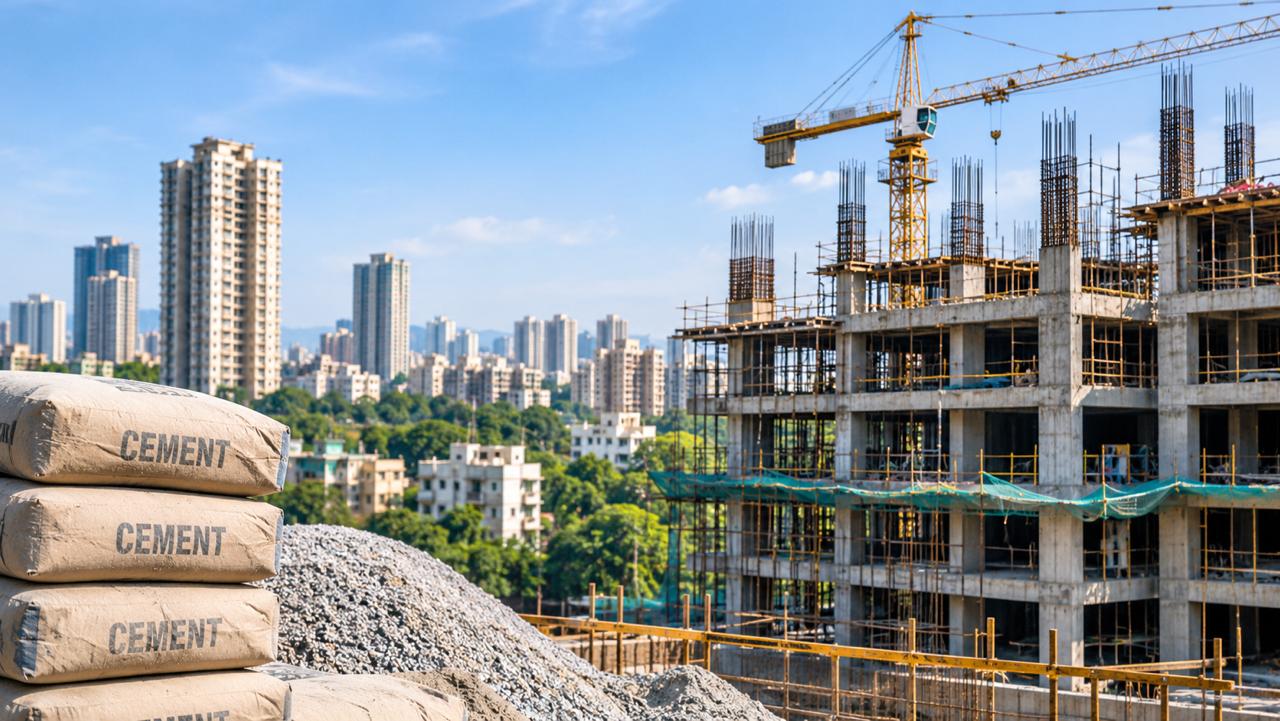
Cement manufacturers are preparing a substantial round of capacity expansion over the next two financial years, according to industry commentary in the market this week. For a Mumbai buyer, this is not an abstract commodity story. Cement is one of the largest input costs in any residential or commercial project, and the supply position over the next three to four years will quietly shape both launch pricing and delivery schedules across Mumbai, Navi Mumbai and Thane.
The context is straightforward. Cement demand in India has been running ahead of fresh capacity for some time, and producers are now responding with brownfield and greenfield additions. When capacity is added at scale, the market typically moves from a tight to a balanced position, and pricing power shifts from the producer back toward the builder and, eventually, the buyer. That transmission is never immediate, but it is real.
For MMR specifically, the timing matters. The region is in the middle of an unusually heavy infrastructure and redevelopment cycle, from metro and coastal road works to cluster redevelopment and large township launches in the extended suburbs. All of that is cement-intensive. A more comfortable supply position over the next few years reduces the risk of sharp input-cost spikes being passed into flat prices mid-construction, which is one of the quieter reasons projects get delayed or re-priced.
It is worth being clear about what this does not mean. Capacity announcements are not the same as capacity on the ground, and cement pricing also depends on fuel, logistics and freight costs, which have their own cycles. Builders should not budget on the assumption of falling cement prices. The more realistic expectation is a steadier cost curve than the one the market has seen in recent years.
Sandeep's take: I read this as a supply-side positive for Mumbai construction rather than a price event. When cement capacity catches up with demand, the biggest beneficiary is project delivery certainty, and in this market delivery track record is what separates a builder who can command a premium from one who cannot. Buyers should treat this as a mild tailwind for under-construction inventory in MMR, not as a reason to expect cheaper flats.
What to watch next: Whether announced cement capacity actually commissions on schedule over the next two financial years, and whether MMR builders begin guiding to firmer delivery timelines in their own disclosures.
Looking to buy or rent in Mumbai?
Talk to a Mumbai property advisory and data platform operating since 1995. Availability is reconfirmed before visits.
More Property News












💬 Comments