
Maharashtra Links Rainwater Harvesting to Old Building Safety
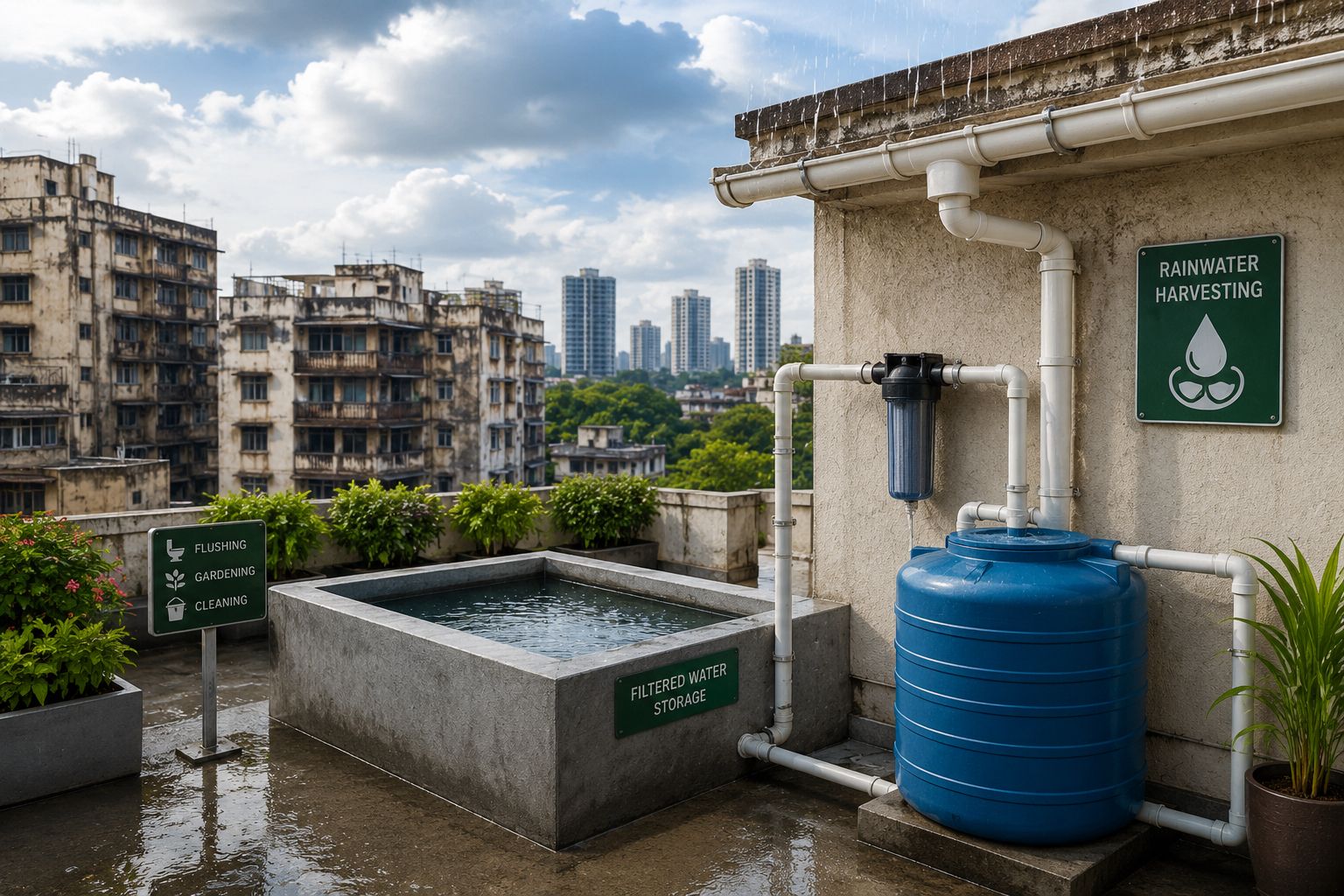
Maharashtra’s move to link rainwater harvesting in old buildings with structural fitness brings a practical safety question into focus: can an ageing structure safely carry the equipment, water load, plumbing changes and roof-level work needed for such a system?
Rainwater harvesting is often viewed only as a water-saving feature. In an older building, however, the installation may involve terrace waterproofing, pipes, filters, storage tanks, recharge pits and changes to drainage. These works need to be planned around the actual condition of the roof, slabs, walls and common plumbing—not added as a cosmetic upgrade.
For flat buyers, this makes building maintenance an even more important part of due diligence. A society that is planning rainwater harvesting should be able to explain whether a structural assessment has been carried out, what work is proposed, how it will be funded and whether the system will be maintained after installation. A non-functional system or poorly executed rooftop work can create leakage and maintenance problems instead of delivering a water-saving benefit.
The rule also gives older societies a reason to review their wider repair needs. In some buildings, rainwater harvesting may be a straightforward improvement. In others, it may reveal that major waterproofing, plumbing renewal or structural repairs should come first.
Key takeaway: Rainwater harvesting in an old building should begin with a safety and maintenance plan—not just a vendor quotation.
Looking to buy or rent in Mumbai?
Talk to a Mumbai property advisory and data platform operating since 1995. Availability is reconfirmed before visits.
More Property News










💬 Comments